

YOUR NEXT LUXURY ADVENTURE: 11 CURATED DESTINATIONS & STAYS

Updated: Jun 15

Start planning your next big adventure with this METTA Edit, perfect for those looking for a luxurious escape in some of the world’s most remote and unique places, experienced by those who seek something beyond the ordinary.
This is a collection of journeys designed for those drawn to exploration in its most meaningful form, from couples seeking shared challenge and discovery to families wanting to spark curiosity from an early age through real-world adventures.
In this METTA Edit, we explore destinations shaping a new era of adventure travel. From archaeological landscapes in Egypt and Italy to nomadic life in Mongolia to the absolute silence of Antarctica, the places where adventure is not just observed but fully lived. Each setting actively shapes how you move, think, and engage with the world around you: immersive, elemental, and unforgettable.
This is adventure, refined. Discover 11 handpicked, adventure-rich destinations every luxury traveler should have on their radar, each paired with a considered place to stay and, in some cases, a bespoke itinerary for when one hotel simply isn’t enough.
1. EGYPT

Egypt is home to one of the most extensive concentrations of ancient archaeological sites in the world and is the ideal destination if you’re looking to immerse yourself in its history. In Egypt, ancient civilizations sit alongside a living present, with archaeological sites, temples, and monuments spread across the landscape rather than behind museum walls. The long-awaited opening of the Grand Egyptian Museum adds a new layer to this, bringing together one of the most significant collections of ancient artifacts in a single contemporary setting.
Egypt is best experienced through time spent within key archaeological sites, private, guided access that brings context to what is being seen, and slow, meaningful journeys along the Nile, where movement between locations becomes part of the experience itself. The river connects temples, burial sites, and settlements that remain central to understanding Egypt’s ancient world.
HOW TO TRAVEL IN EGYPT AND WHERE TO STAY
Four Seasons Hotel Cairo

Four Seasons Hotel Cairo at Nile Plaza offers a considered vantage point over one of the city’s most iconic features, the Nile itself. Set within one of Cairo’s most established addresses, it balances contemporary comfort with a sense of place, where floor-to-ceiling views shift between the river’s movement and the city’s layered skyline. Its position makes it an ideal base for exploring both the cultural depth of Cairo and the surrounding archaeological sites, while returning to a space defined by calm, service, and privacy.
ORO Nile Charter

If you want to explore the Nile beyond Cairo, ORO Nile Charter is the perfect way to do it. Redefining the river journey, this boutique, fully private dahabiya-style vessel is designed exclusively for charter. With just nine suites, it feels more like an intimate floating residence than a traditional cruise. Guests enjoy fully bespoke itineraries between Luxor and Aswan, featuring curated access to temples, riverside sites, and hidden archaeological gems. It is an experience centered entirely on privacy, personalized service, and deep cultural immersion.
2. ICELAND

Few destinations transform as dramatically between seasons as Iceland. In winter, the landscape becomes almost unrecognizable, black volcanic terrain covered by snow, frozen waterfalls, glacier crossings by snowmobile, and long nights spent searching for the aurora. By summer, the country opens up in a completely different way, with extended daylight hours allowing for long hiking days, access to remote highland regions, and exploration deep into Iceland’s fjords and volcanic terrain.
What makes Iceland distinct is the sheer scale and unpredictability of the environment. Conditions change quickly, routes often feel remote, and much of the experience is shaped by the landscape rather than infrastructure. Adventure here is physical, immersive, and closely tied to the natural terrain itself.
WHERE TO STAY IN ICELAND
Eleven Deplar Farm

Eleven Deplar Farm sits deep within Iceland’s remote Fljót Valley, surrounded by mountains, rivers, and untouched wilderness far removed from the country’s more traveled routes. Originally a sheep farm, the property has been reimagined into a highly design-led retreat that feels intentionally isolated—the opposite of a conventional city hotel.
The experience is built around access to the landscape itself. In winter, guests can snowmobile across glaciers, heli-ski remote mountain terrain, and chase the northern lights far from artificial light pollution. During summer, the focus shifts towards guided hiking, horseback riding, sea kayaking, and salmon fishing within the surrounding valleys and fjords. Despite the scale of adventure outside, the property remains deeply restorative, with geothermal pools, Nordic-inspired interiors, and a pace that encourages complete immersion in the environment around it.
3. MONGOLIA

If an underrated adventure, from a truly authentic destination, is what you’re after, then Mongolia is for you. Mongolia offers one of the rarest forms of adventure travel left. Vast, sparsely populated, and still deeply connected to its nomadic traditions, this is a destination where movement across the landscape remains part of everyday life rather than a curated experience for visitors.
Journeys through the Gobi Desert unfold across enormous open terrain, with camel trains crossing dunes, mountain valleys, and remote steppes that can stretch for hours without signs of infrastructure or settlement. Nights are spent in traditional ger camps beneath some of the darkest skies in the world, where the absence of light pollution makes the scale of the landscape feel even more pronounced. What makes Mongolia so distinct is not only its remoteness but also the sense that many aspects of life here remain fundamentally unchanged despite the modern world around it.
WHERE TO STAY IN MONGOLIA
Three Camel Lodge

Three Camel Lodge provides a highly considered base within the Gobi Desert, combining traditional Mongolian design with a level of comfort rarely found this deep into the landscape. Built in the style of an authentic nomadic encampment, the lodge is centered around handcrafted gers with wood-burning stoves, locally made furnishings, and panoramic views across the desert terrain.
The experience extends far beyond the property itself. Guests can explore the Flaming Cliffs, ride alongside nomadic herding families, visit ancient dinosaur fossil sites, and travel by camel through sections of the desert that feel almost entirely disconnected from modern infrastructure. The lodge’s low-density approach and strong focus on cultural preservation create an experience that feels immersive rather than observational, allowing Mongolia’s scale, silence, and traditions to remain at the center of the journey.
An expedition through Mongolia
Mongolia offers one of the few remaining opportunities for truly immersive expedition travel. This journey moves far beyond the country’s more traveled routes, combining the vast open landscapes of the Altai Mountains and Gobi Desert with rare cultural access and highly specialized guiding.
Guests travel between remote valleys, alpine terrain, archaeological sites, and nomadic communities, tracing landscapes where eagle hunting traditions, herding culture, and ancient trade routes still shape everyday life. Alongside private access to historians, paleontologists, and local Kazakh falconers, the experience unfolds through stays at Three Eagle Camp and Three Camel Lodge, where Mongolia’s dramatic scale and remoteness remain at the center of the journey. From dinosaur fossil discoveries at the Flaming Cliffs to glacier-fed valleys beneath the Tsambagarav Mountains, this is a form of adventure travel grounded in movement, cultural depth, and direct connection to one of the world’s last truly untamed landscapes.
It’s a truly captivating experience. If you’re looking for a similar experience, then get in touch with the team at members@mettamanagement.com.
4. CHILE

Patagonia is one of the few places where the scale of the landscape genuinely changes your perception of distance, time, and isolation. Mountain ranges stretch uninterrupted for miles, weather systems move visibly across the terrain, and entire valleys can pass without signs of habitation. It is a destination best experienced slowly and physically and best discovered on horseback.
Journeys through the Andes foothills follow traditional gaucho routes across open plains, glacial rivers, and mountain trails that have changed little over generations. Hike through the iconic Torres del Paine National Park before taking a trip to the unique marble caves of Lago General Carrera, or simply admire the landscapes from your hotel. In Chile, there’s an adventure for everyone.
HOW WE RECOMMEND SEEING CHILE & CHILEAN PATAGONIA
A carefully curated Chile itinerary
You really can’t experience Chile and Patagonia properly by staying in one place. With vast landscapes, multiple national parks, and long winding routes connecting each region, it’s a destination best explored through movement across the country itself.
That’s why we recommend a carefully curated itinerary that journeys through some of Chile and Patagonia’s most striking and remote landscapes.
This itinerary begins in Santiago at Hotel Magnolia, a restored heritage property positioned within the capital’s historic center, before continuing south to andBeyond Vira Vira in Chile’s Lake District. Surrounded by forests, lakes, and volcanic terrain near Pucón, the lodge combines highly personalized adventure with access to hiking, horseback riding, kayaking, and scenic helicopter experiences above Villarrica Volcano.
Further south, Awasi Patagonia provides a private base for exploring Torres del Paine, with dedicated guides and 4WD vehicles allowing for tailored access across Patagonia’s mountain landscapes and wildlife regions. The journey concludes at Viña VIK in the Millahue Valley, recently named the World’s Best Vineyard in the 2025 edition of The World’s 50 Best Vineyards, where vineyard landscapes, gastronomy, and contemporary design offer a quieter contrast to the scale of Patagonia.
If you’re looking for a similar experience, then get in touch with the team at members@mettamanagement.com.
5. CANADA

There are few places left where luxury travel still involves genuine physical activity. In British Columbia’s ranchlands, days are spent on horseback freely crossing open landscapes, moving through forests, rivers, and mountain landscapes that shift constantly with weather and season. Early starts, long riding hours, and changing conditions are all part of the experience, with much of the day spent outdoors and away from built infrastructure.
This is a very different interpretation of adventure travel from the polished model often associated with luxury hospitality. Guests learn practical ranch skills, ride alongside experienced wranglers, and travel across large areas of wilderness that remain largely untouched. Beyond horseback riding, the region also offers fly fishing, hiking, kayaking, and wildlife tracking, all shaped by the scale and remoteness of the surrounding environment.
What makes this a truly unique experience is how closely connected you’ll feel to the landscape. Routes change with terrain and weather, days are structured around movement through the wilderness, and much of the experience takes place far from towns or heavily developed tourism infrastructure.
WHERE TO STAY IN CANADA
Siwash Lake Wilderness Resort & Ranch

Siwash Lake Wilderness Resort & Ranch sits within British Columbia’s remote Cariboo region, stretching more than 10,000 acres of unfenced wilderness riding territory. Family-owned and intentionally boutique in scale, the ranch hosts a maximum of just 12 to 16 guests at a time, creating an experience that feels highly personal and intimate. If you’re after an off-grid luxury wilderness experience, then this is the spot for you.
Originally conceived as a working ranch, the property has evolved into one of Canada’s most distinctive wilderness 5-star lodges, balancing authentic ranch culture with a highly refined level of hospitality. Accommodation ranges from timber-framed lodge suites to luxury canvas cabins and star-gazer tents positioned above the lake, many with wood-burning stoves, outdoor showers, and uninterrupted views across the surrounding wilderness.
The experience centers around a privately guided adventure. Horseback riding forms the core of the ranch, with routes moving across grasslands, forests, and remote backcountry terrain alongside expert wranglers. Beyond riding, guests can fly fish secluded rivers, kayak across wilderness lakes, hike through post-wildfire ecosystems now regenerating naturally, and take part in ranch activities that connect them directly to the environment. Evenings shift into a slower rhythm, with open-air dining, locally sourced cuisine, and long views across the meadow as horses move back through the valley below.
6. SOUTH POLE, ANTARCTICA

There are very few places left on earth that still feel genuinely inaccessible. The South Pole remains one of them. More people have summited Everest than have stood at the bottom of the planet itself, making Antarctica one of the rarest forms of travel, not simply because of cost or logistics, but because of the sheer difficulty of reaching this incredible destination.
What makes Antarctica such a unique destination is the scale and isolation of the environment itself. Vast expanses of ice stretch uninterrupted for miles, weather conditions shift rapidly, and even the smallest human presence feels minimal against the landscape. Time here is shaped entirely by the elements, with long periods of silence and endless daylight or darkness depending on the season.
There is also a profound sense of psychological remoteness, unlike anywhere else on earth. The scale of the environment is difficult to fully process until you are within it, surrounded by nothing but ice, horizon, and complete stillness in every direction.
Adventure here is not built around adrenaline alone but around access to a place that remains fundamentally outside ordinary human experience. Traveling to the South Pole requires military-grade logistics, specialist aircraft, and extreme weather coordination, with conditions shaping every stage of the journey. Get ready to enter one of the only truly untouched environments left on the planet.
HOW WE TRAVEL TO THE SOUTH POLE & WHERE TO STAY
The White Desert: South Pole Explorer

South Pole Explorer is part of White Desert’s private Antarctic operation, one of the only luxury expedition providers offering direct access from Cape Town into the interior of Antarctica. The journey begins with a dedicated intercontinental flight into Wolf’s Fang Runway, a privately operated blue-ice airstrip, before transferring into a network of exclusive camps within Queen Maud Land.
Accommodation is centered around two main polar camps, Whichaway and Echo, both purpose-built for extreme conditions yet designed with a strong focus on comfort, insulation, and sustainability. Whichaway sits on the edge of freshwater lakes surrounded by rocky outcrops, while Echo Camp is positioned within a stark, lunar-like landscape of ice and nunataks. Each features insulated sleeping pods, heated communal spaces, and chef-led dining, all powered with minimal environmental impact and designed to be fully removable with no lasting footprint on the ice.
From these camps, guests can undertake a series of guided polar experiences, including glacier hiking, ice cave exploration, snowmobiling, and visits to Emperor penguin colonies at Atka Bay. The South Pole itself is reached via a staged journey deep into the Antarctic interior, involving long-range ski aircraft and refueling stops before arriving at 90° South, a location visited by only a very small number of travelers each year.
South Pole Explorer is a truly unique way to experience one of the most unique and under-traveled parts of the world. If you’re after an experience only a few will have taken part in, then this is certainly for you.
7. OKAVANGO DELTA
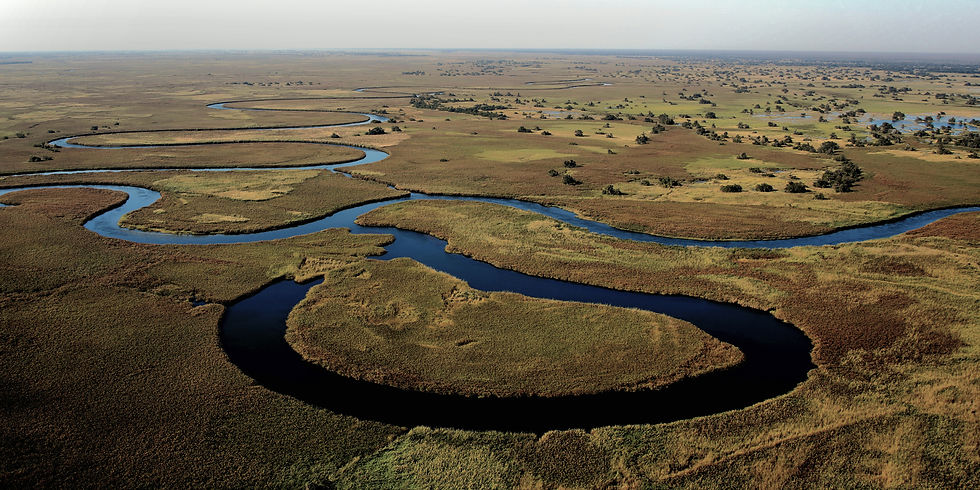
The Okavango Delta is one of the most unusual landscapes on earth. A river system that never reaches the sea instead spills into the Kalahari Basin, spreading across the land in a shifting network of channels, lagoons, and seasonal floodplains. What results is an ecosystem defined by constant movement, where water dictates life, and wildlife patterns change with the rhythm of the floods.
This is safari in its most immersive form. Travel here is dictated by the floodplains themselves. Movement shifts with water levels, access changes with the season, and each experience is shaped by where the channels open and the wildlife gathers. Mokoro canoes glide through narrow reed-lined channels, game drives move across open floodplains, and walking safaris reveal the smaller details of the landscape that are often missed from vehicles. The sense of proximity to wildlife is immediate and unfiltered, shaped by an environment where animals and water coexist in the same shared space.
WHERE TO STAY IN THE OKAVANGO DELTA
Vumbura Plains

Vumbura Plains is set within a private concession in the northern Okavango Delta, offering one of the most exclusive safari experiences in Botswana. Operated by Wilderness, the camp is split into two smaller satellite camps, each designed to maximize privacy while maintaining a low environmental footprint within a highly protected wilderness area.
Suites are elevated on wooden platforms to respond to seasonal flooding, with open layouts, private plunge pools, and expansive decks overlooking the surrounding floodplains. The design is deliberately understated, allowing the landscape to remain the focal point at all times. With no surrounding fences, wildlife moves freely through the concession, meaning elephant, antelope, and predator species are regularly seen in and around camp.
Experiences are guided and highly personalized, ranging from mokoro journeys through seasonal waterways to game drives tracking lion, leopard, and wild dog across the Delta. Walking safaris offer a more intimate perspective on the ecosystem, led by highly experienced local guides. The result is a safari experience completely integrated within nature.
8. WYOMING

In winter, Wyoming becomes a completely different, more wild landscape. Snow settles across the vast open terrain, mountain passes close, and Yellowstone in winter operates under strict seasonal closure, with large areas closed to private vehicles and access limited to guided transport only. The result is a park that feels significantly more stripped back, with far fewer people and a heightened focus on wildlife movement. With vehicle access limited, the park feels stripped back to its essential elements: wildlife, weather, and wilderness.
This is when Yellowstone reveals a different kind of intensity. Wolf packs move through the Lamar Valley, bison herds navigate deep snow, Geysers, hot springs, and thermal basins remain active throughout winter, with steam and heat visibly cutting through the snow-covered landscape. Access is limited to guided transport, with snowcoaches and specialist excursions offering rare entry into the interior during the colder months.
WHERE TO STAY IN WYOMING
Brush Creek Ranch

Brush Creek Ranch sits on over 30,000 acres of private, secluded wilderness in Wyoming’s Sierra Madre range, offering a refined base for exploring the wider Yellowstone region. Originally a historic cattle ranch, it has evolved into one of the most comprehensive luxury ranch experiences in the United States, combining authentic working-ranch heritage with high-end hospitality.
Accommodation is spread across lodge suites, private cabins, and homestead-style residences, each designed with a strong sense of place and privacy. The ranch operates year-round, but winter brings a distinct focus on cold-weather experiences, from guided snowshoeing and ice fishing to private snowmobile excursions into the surrounding terrain.
Guests accessing Yellowstone in winter typically do so via organized day expeditions, traveling into the park’s interior with specialist guides. Part of what makes the experience so memorable is the contrast between long days spent exploring Yellowstone’s stark, wildlife-rich winter landscapes and returning to the warmth of Brush Creek Ranch, where firelit dining, expansive views, and an evening spent soaking up the landscape await.
9. ALASKA

Alaska is one of the last places in North America where scale still feels genuinely uncompromised. Glaciers carve through mountain ranges, weather systems dictate access, and entire regions remain unreachable except by air.
This is a destination where terrain is the experience. Ski planes land directly on icefields, helicopter routes shift with weather windows, and movement through the landscape is entirely dependent on conditions that can change within hours. The result is a true adventure shaped by one of the most dramatic wilderness environments in the world.
WHERE TO STAY IN ALASKA
Sheldon Chalet

If you’re looking for a truly unique and intimate setting, then Sheldon Chalet is for you. Positioned on a remote nunatak deep within Denali National Park, surrounded by glacial ice and alpine peaks, accessible only by ski plane from Anchorage or Talkeetna, the chalet sits at 6,000 feet with uninterrupted views across the Ruth Glacier and the surrounding Alaska Range. Designed as a five-bedroom luxury alpine retreat, the property combines high-end comfort with complete isolation. Interiors are warm and minimal, with floor-to-ceiling windows framing the glacier landscape, while chef-led dining and guided outdoor experiences form the structure of each stay.
When visiting Sheldon Chalet, you really don’t need to go far for an adventure. Days are spent directly within the surrounding environment, with heli-accessed excursions, glacier exploration, and summit viewpoints available depending on conditions. There are no roads, no nearby settlements, and no alternative routes in or out, making the experience entirely dependent on aviation access and weather windows.
If you’re after unparalleled immersion in the Alaska mountain range, then you’ll have to try hard to find somewhere better.
10. HAWAII

Hawaii is one of the few places where the landscape is still actively being formed. On the Big Island, volcanic activity remains active in certain regions, with lava flows continuing to reshape parts of the coastline over time. Lava continues to enter the ocean in certain areas, creating new land, while older terrain is constantly reworked by heat, sea, and weather.
Away from the coast, the environment shifts quickly. Dense jungle trails cut inland through tropical terrain, rising into higher ground above the cloud line, while offshore waters remain some of the most active in the Pacific for marine life. At night, manta ray dives take place just off the coastline, where light and plankton draw movement into a controlled but natural encounter.
WHERE TO STAY IN HAWAII
Kona Village

If you’re after the perfect mix of adventure travel with wellness, then Kona Village in Hawaii is the spot for you. A Rosewood Resort sits along the Kona Coast on the western side of the Big Island, rebuilt on the footprint of the original village with a focus on low-density design and direct connection to the surrounding landscape. Accommodation is made up of standalone hālau-style guesthouses positioned to preserve privacy and maximize openness to the elements, with materials and layout referencing traditional Hawaiian forms rather than contemporary resort structures.
The hotel itself is quietly in tune with the surroundings. There are no towers or layered buildings, allowing the lava fields, palm-lined shoreline, and ocean horizon to remain uninterrupted.
Experiences are led by the island itself. Guests can access Hawaii Volcanoes National Park with specialist guides, take part in manta ray night dives just offshore, or explore the island’s shifting microclimates through hiking and coastal excursions. Unusually, the retreat also welcomes families, with the historic landscape offering something of interest for every generation.
11. ITALY

Italy offers a different kind of adventure; instead of focusing on adrenaline, it is centered on access to some of the world’s most intact archaeological sites. In Herculaneum, Roman life is preserved in unusual detail, including wooden furniture, mosaics, and remains that provide a direct record of daily life at the time of Mount Vesuvius’ eruption. Unlike many archaeological sites, much of what is seen here is not reconstructed but preserved in situ.
Nearby, Pompeii provides a wider and more expansive view of Roman urban life, with streets, homes, and public buildings still clearly legible within the city grid. Visiting both sites offers two different perspectives on the same moment in history, one more intimate and structurally preserved, the other broader in scale and layout.
Along the Amalfi Coast, this sits within a coastal landscape defined by steep terrain, historic towns, and long-established routes connecting inland archaeology with the shoreline. The contrast between coastal living and archaeological discovery is a defining part of the region, with both Herculaneum and Pompeii accessible for private guided visits from the coast.
WHERE TO STAY IN ITALY
II San Pietro di Positano

Il San Pietro di Positano is set into the cliffs above the Amalfi Coast, built directly into the rock and positioned to follow the natural contours of the coastline. Family-owned and independently run, the hotel has developed over time rather than being newly constructed, with its layout shaped by the cliffside rather than imposed upon it.
Rooms are individually designed and positioned across multiple levels, each oriented towards the sea. Private terraces open directly onto uninterrupted coastal views, while the property’s gardens descend through layered pathways to a private beach club accessed by a lift carved into the rock.
The hotel also provides access to private archaeological experiences in the region. Guests can visit Herculaneum with specialist guides, offering structured context and interpretation of the site, while Pompeii is also within reach for a broader understanding of Roman urban life and its preservation following the eruption of Mount Vesuvius.
WHERE TO GO ON YOUR NEXT ADVENTURE
If you’re looking to take on your inner Indiana Jones and experience a sense of adventure only very few have taken on, then these are the experiences for you. Ranging from polar expeditions and desert travel to archaeological regions and remote wilderness areas. Whether navigating Mongolia’s open desert landscapes, flying into the interior of Antarctica, crossing Patagonia on horseback, or exploring the preserved streets of Herculaneum, these are experiences that place you directly within the environment rather than alongside it.
In many cases, the journey itself becomes just as significant as the arrival, with movement through each setting forming part of the experience rather than simply connecting one destination to the next.
From the glaciers of Alaska to the floodplains of the Okavango Delta, this is adventure travel at its most immersive, across some of the world’s most remote landscapes. If you’re looking for a bespoke itinerary, get in touch today with the team at members@mettamanagement.com.
Comments